top of page

Blog

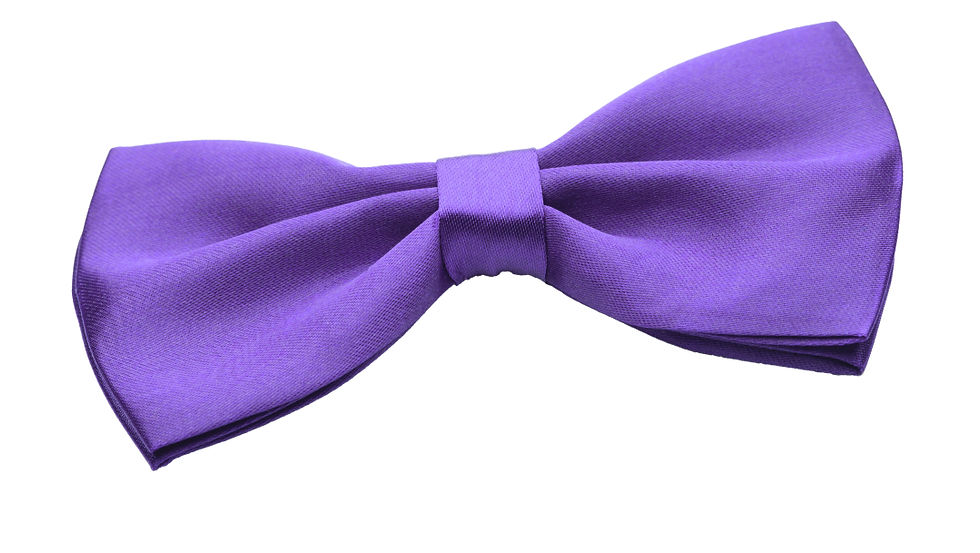
One of the stories my mom always loved to tell and remember is about how I used to obsess over certain accessories or clothes as a child, without any clear reason or inspiration. I would simply fixate on something, and I didn’t care about odd looks or whether people thought it was tacky or weird. The most notable story? The bow tie.


The Purple Bow Tie
Yes, that’s little me in the school photo, wearing my unmistakable purple bow tie

Around the age of seven, I became obsessed with wearing bow ties. I had a favorite one in purple fabric and another plastic one that I used less often. I even wore a lilac crochet tie—yes, crochet! But the one I loved the most and felt was the coolest was that purple fabric bow tie. I paired it with all kinds of looks. What mattered was having the accessory with me. It was mine, and no one else had anything like it. I remember so many times when we were about to go out as a family, and my mom would ask, “You’re really wearing the tie?” And I had no doubt: yes. Maybe a bit embarrassing for a mother, but I was convinced I looked awesome.


I never brought this up in therapy, but it would be interesting to explore one day. Recently, while doing a marketing strategy exercise, we were asked to look back at who we were as children—our dreams, what we wanted to be, our strong traits—and there she was again, in full fashion force: the purple bow tie.


Reflecting on this strong symbol, I realized that even as a child, I carried this sense of not belonging to just one group or category. And back then, that didn’t make me anxious or confused—it just meant fully living my identity. I had the freedom to be who I was, even when faced with disapproving looks, and I kept going.

The Purple Bow Tie

Later, that became something like being ahead of my time—often saying too much, oversharing more than was “appropriate.” In adulthood, there were moments when I hid that bold, unapologetic side of me—when I silenced or adapted myself too much. But whenever I sat down to write something personal, themes like belonging, self-acceptance, and embracing identity always showed up in my work.


Since my first cancer treatment in 2022, this subject came back with full force. And now, during this second round (which is over, bye-bye, cancer!), it exploded completely. The purple bow tie became my internal symbol—a reminder to be who I am, without shame, without needing a reason not to fully live it.


I still believe in the importance of being flexible and adapting to life’s circumstances. After all, being true to yourself isn’t the same as being stubborn or trying to shock those who are different. With maturity, you learn that. But adapting to every single social, professional, and family situation has a limit. That limit comes when you ask yourself, “Where did that child go?”


Well, I’ve found my purple bow tie again. And you?


Since buying my first bra, going to the beach wearing a “top,” through my teenage years in school, and even in the caricatures I drew of myself (or others drew of me), I was always the girl with the big boobs.

From Big Boobs to Little Cherry
2011 and my first boudoir photoshoot <3

When silicone implants became more common in Brazil — around the early 2000s — I overheard two women chatting in a movie theater bathroom about how people were going overboard with implant sizes. As I walked out of the stall to wash my hands, they stopped talking. Maybe they thought I had implants too — my boobs were that big.


Some random flings from my past have told me they still remember my boobs from school. Finding a dress shirt that fit my small back and large chest? A nightmare. Triangle bikini? Not a chance. Going braless? Sweet illusion. I carried these big boobs through life, always kind of thinking I’d reduce them one day — but that thought felt far off. I was terrified of surgery.

Now, after four surgeries (and heading into a fifth in two days), I laugh at that fear.

From Big Boobs to Little Cherry
When I was 14 years old

Having big boobs, just like having a prominent nose, a certain type of mouth, or legs shaped a certain way — it becomes part of who you are. It might sound silly, but me, Rita with the big boobs, was one version. And this new version that’s emerging — who I affectionately call “little cherry” — is definitely another. Not better or worse. Just different.


This new version will need new tops, “no bra” moments (that I always dreamed of), new necklines. Maybe she’ll be bolder — who knows? Different, for sure.


When I got my first breast cancer diagnosis in 2022, my first question was: Will I have to remove my boobs?The oncologist said no. In my case, the chance of recurrence was the same whether I removed them or not. So we went with a lumpectomy (removing just what was left of the tumor after chemo). I was relieved — still very attached to my big boobs. I knew I’d have to reduce them eventually, and honestly, I kind of wanted to. But I kept them — still a big part of my identity.


From Big Boobs to Little Cherry
In my 20's

When the cancer came back less than two years later, mastectomy was the only option. Initially, they considered removing both breasts, but later decided to remove only the right one, where the cancer had returned both times. I panicked.


The panic only eased when I saw the reconstruction options. I realized I could still have breasts that reflected my “booby personality” — not massive anymore, but with presence.


From Big Boobs to Little Cherry
My hubby's description of me

The unilateral mastectomy happened. And the recovery? It was rough. June was a complicated and delicate month because of the skin on that side, previously treated with radiation, now as fragile as tissue paper. I had two urgent surgeries within 10 days, and my breast was reduced by half — until it became the “little cherry.”


I haven’t had the final implant yet. Right now, I’m still using a tissue expander, which stretches the skin in preparation for the implant. The other breast? Still the same ol’ big one — but it’s going to get a reduction soon too, to match the cherry.


Have I cried through this process? Absolutely. And I’m still figuring out who this new Rita is — the one with the small boob.


But now, I welcome this new woman: bold in her attitude and courage, with a small breast that, thanks to a side lift and the future implant, will stand perky for quite some time — proudly saying: "I made it."


Oh, dear Tetris—what a wise message you’ve taught us."Fitting in" seems harmless, but it can creep into even the most self-aware and well-therapized minds.

Tetris taught me that when you try to fit in you'll disappear

It’s not just about the classic story of parents who expected a different career or life path from you. It’s about trying to fit into someone else’s idea of a perfect partner. It’s forcing yourself to enjoy wine-and-paint nights with friends when you’d rather be anywhere else. It’s blending into a job that demands you be more aggressive when that’s just not who you are.


Fitting in—when it goes against who you really are—sucks.It sucks bad.

Because when you try too hard to fit in, you start to disappear.Just like in Tetris: the better the pieces fit, the faster they vanish. Poof. Gone.


But here’s the thing—fitting in is not the same as being flexible or open-minded. Exploring new ideas, growing, shifting—that’s all beautiful. But fitting in at the expense of yourself? That’s a slow erasure of your identity.


Tetris taught me that when you try to fit in you'll disappear

Every time you shrink yourself to match someone else’s expectations, you move further away from your truth—your dreams, your purpose.


Each of us came to this planet with a reason to be here. It might take a lifetime to find that reason—but the more you disappear, the less chance the world has to experience the real you.

And you matter. Your story matters. So please… don’t vanish.


bottom of page